
"View Dependencies" tab
It is also possible to check dependencies directly from a file, similar to how the SOLIDWORKS " Find References " function works. The difference between the " Dependencies " utility and this feature is that the file is not opened in SOLIDWORKS.
To do this, use the " View Dependencies " tab, where you can simply drag and drop SOLIDWORKS files directly to view their dependencies.
So that the '' utility windowDependencies"To prevent it from disappearing, tap the icon"  .
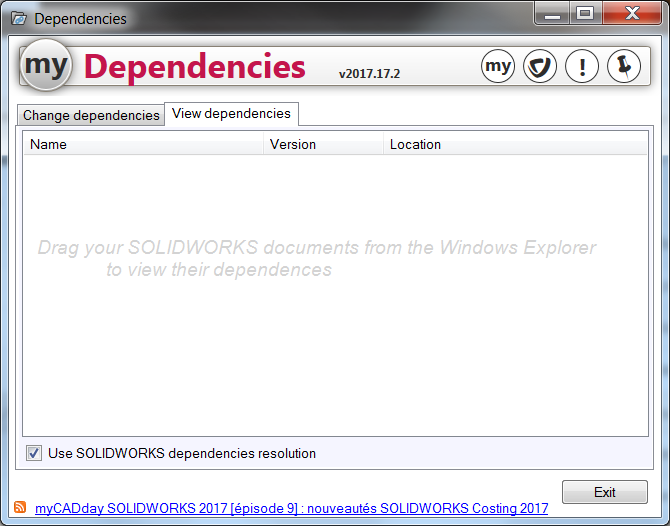
- Example 1:
We would like to analyze the drawing " AssemblyBoard.SLDDRW."
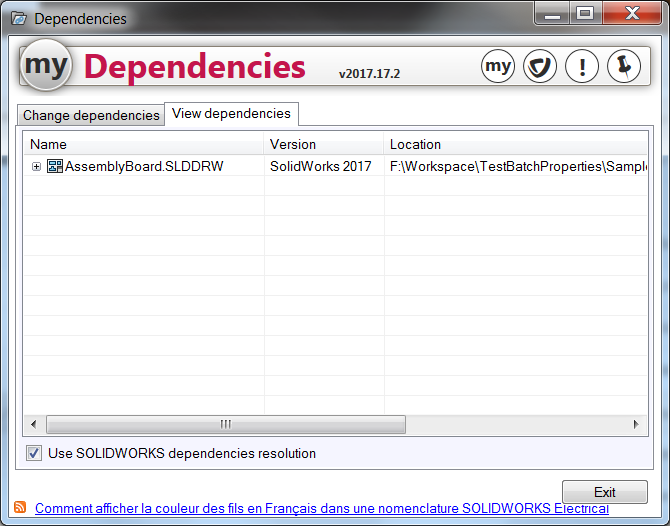
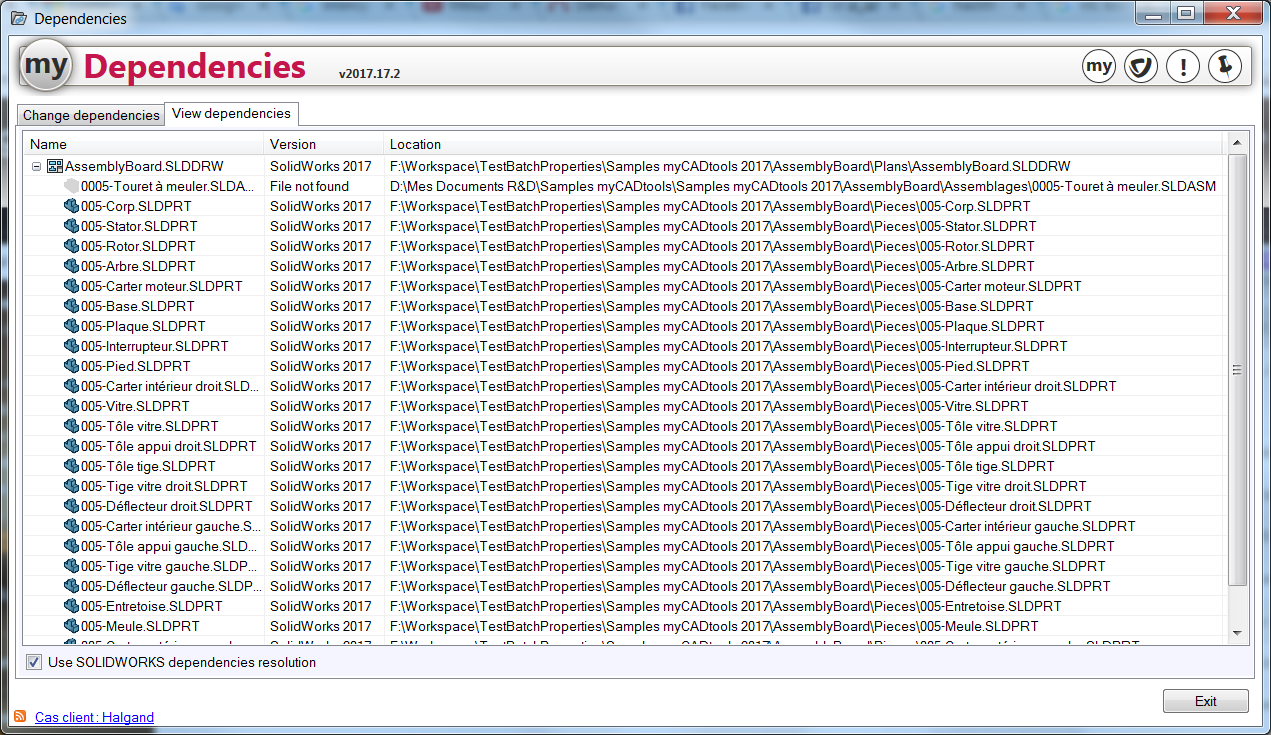
By pressing  visualize the dependencies of each file, whether it's a drawing, an assembly or a part. This allows you to check the location of each component. Here, after processing, you can see that the new location has been taken into account.
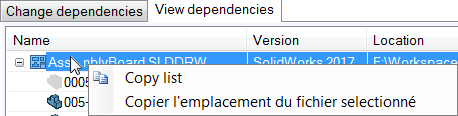
By right-clicking on the drawing, you can “Copy the location of the selected file” or “Copy the list” of identified dependencies to the clipboard. This latter feature is also available in the SOLIDWORKS “ Find References...” function, but with that function, you must open the file in SOLIDWORKS.
- Example 2:
Optimizing the analysis of missing dependencies. To do this, uncheck the following option:

Here, we analyze the dependencies of the " Briquet.sldasm " file.
All the references are well-chosen.
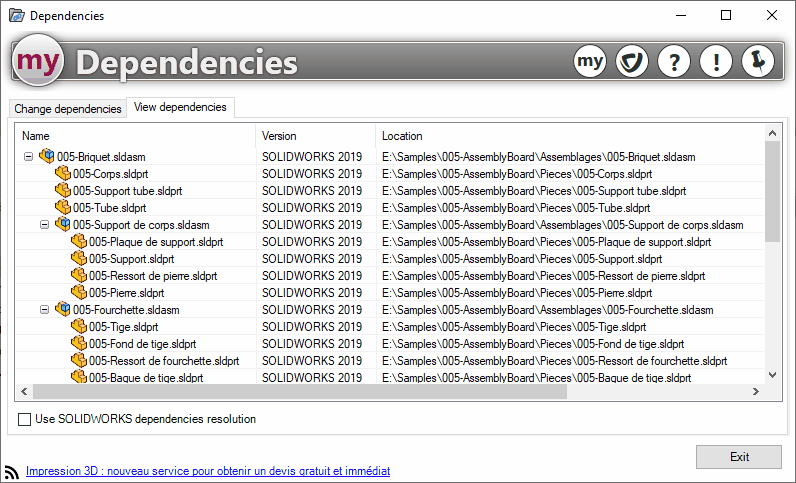
Now we'll move the " Pieces " folder, which contains all the parts included in the assemblies.
If we rerun the dependency analysis in the " View Dependencies " tab, a message appears indicating that some references could not be found and prompting us to resolve this issue (in this case, 23 unresolved references).
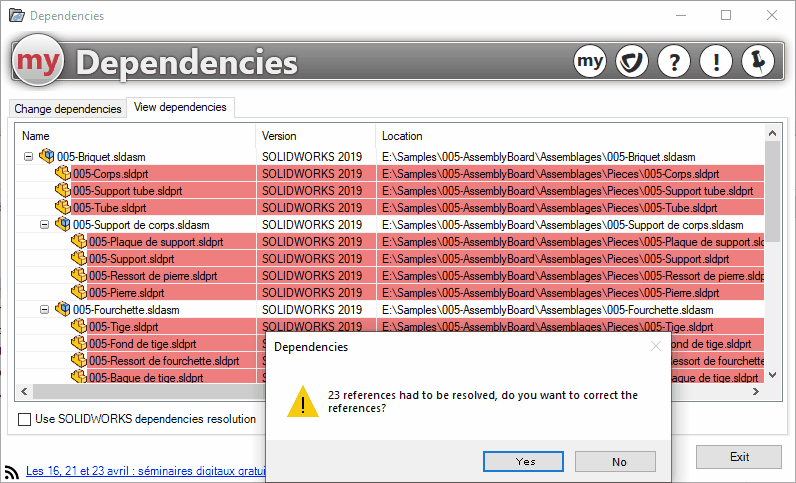
By responding " YES " to the invitation, all references will be resolved.
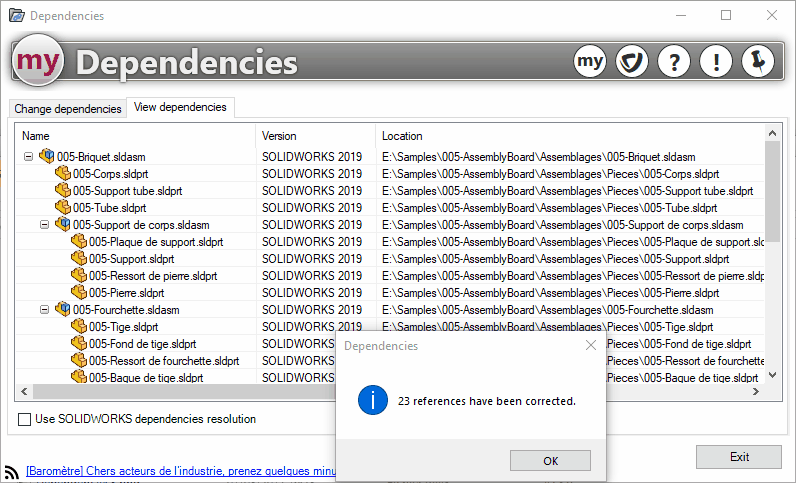
We can see that " Dependencies " has indeed updated the path for the new " Pieces " directory, which had been moved.