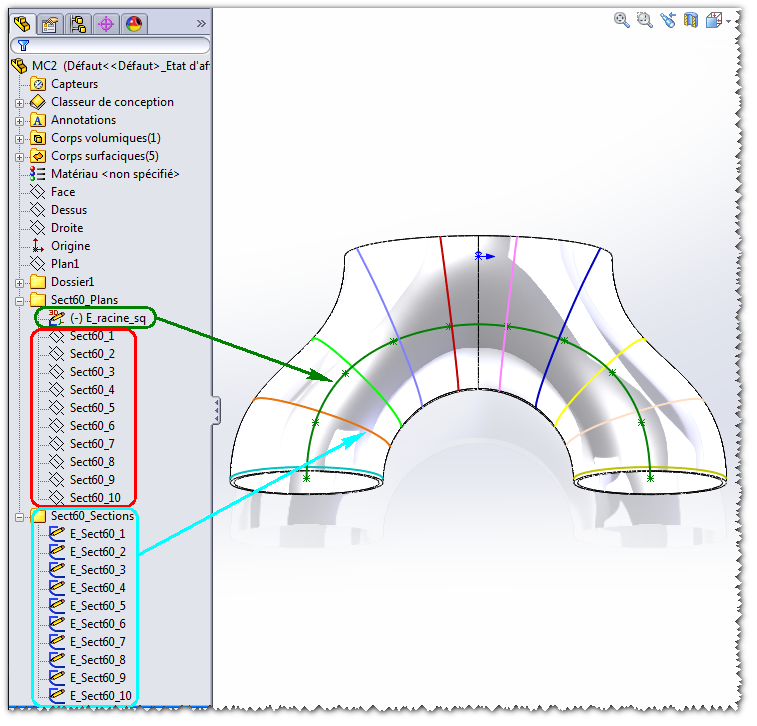
Using the "Plans Along a Skeleton Curve" method
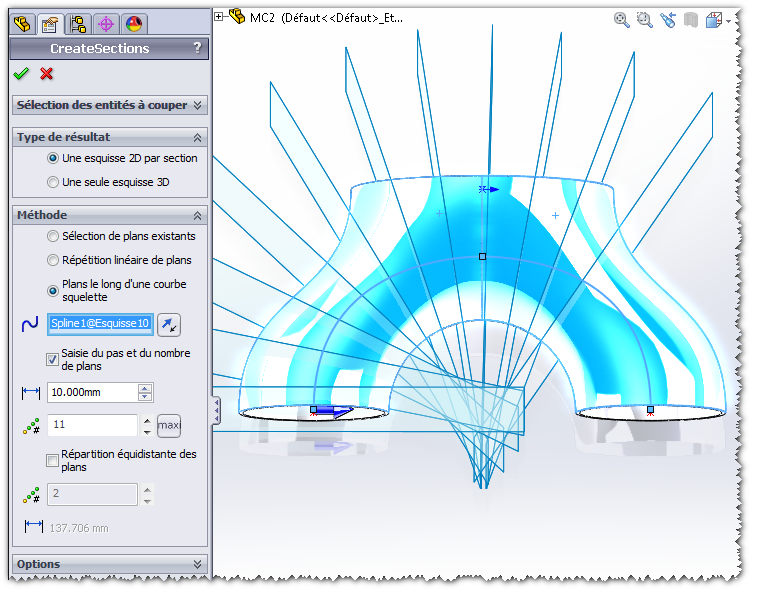
Example: Create multiple planes along a skeleton curve to determine where those planes intersect with the selected entities to be cut. The result will be a 2D sketch for each plane created, or a single 3D sketch containing all the entities (sections).
Here, we want to create 11 intersections along the selected spline at 10-mm intervals.
By clicking on the  The side of the curve is inverted to create the planes.
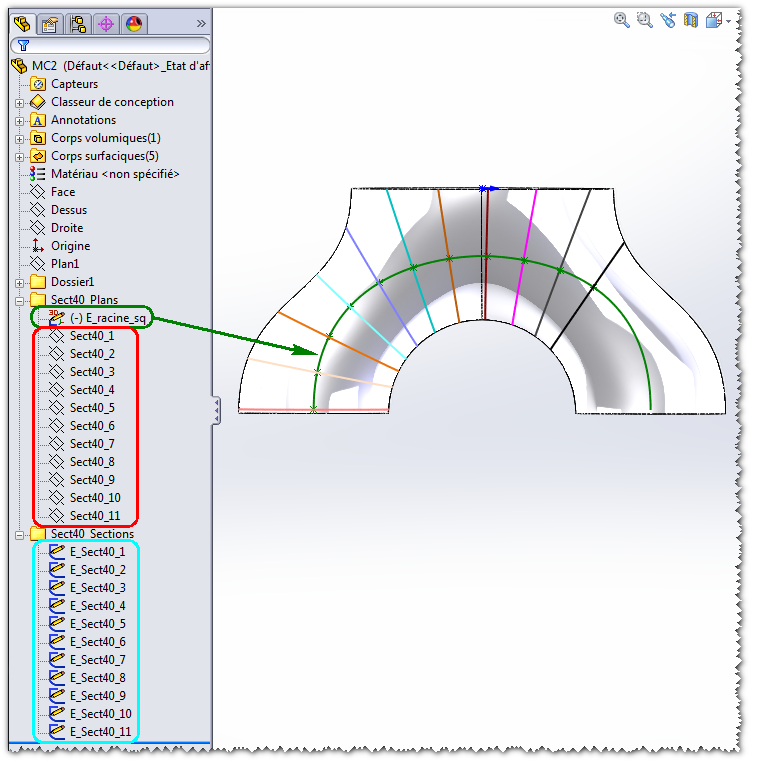
The result achieved in a single step is the creation of:
- A 3D curve that allows you to create plans.
- Of the 11 plans requested.
- Of the 11 2D sketches requested.
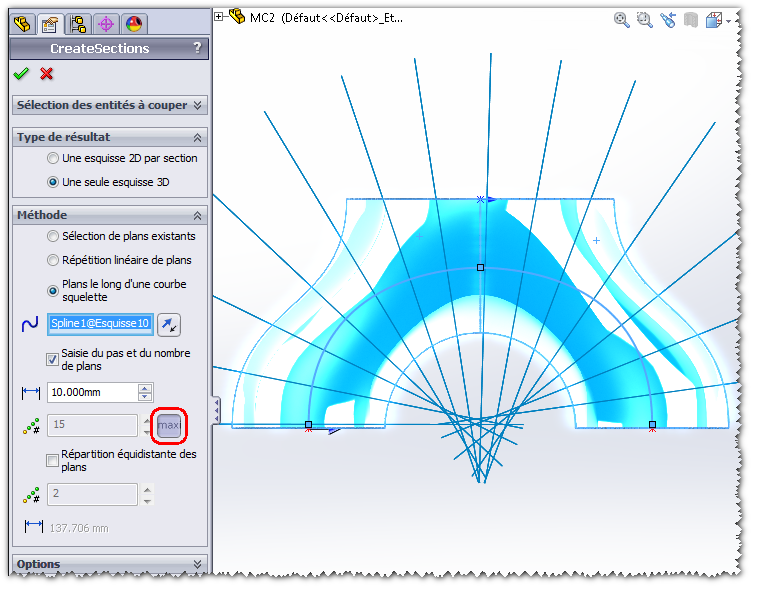
You can click on the  This creates the maximum number of planes evenly distributed along the curve.
Here, planes are created at 10-mm intervals. The calculated number of planes is displayed (grayed out).
By clicking on the  The side of the curve is inverted to create the planes.
Note that the distribution is not equidistant (note the position of the last frame relative to the end of the skeleton curve).
The result achieved in a single step is the creation of:
- A 3D curve that allows you to create plans.
- Of the 15 plans calculated.
- 1 requested 3D sketch, including cross-sections.
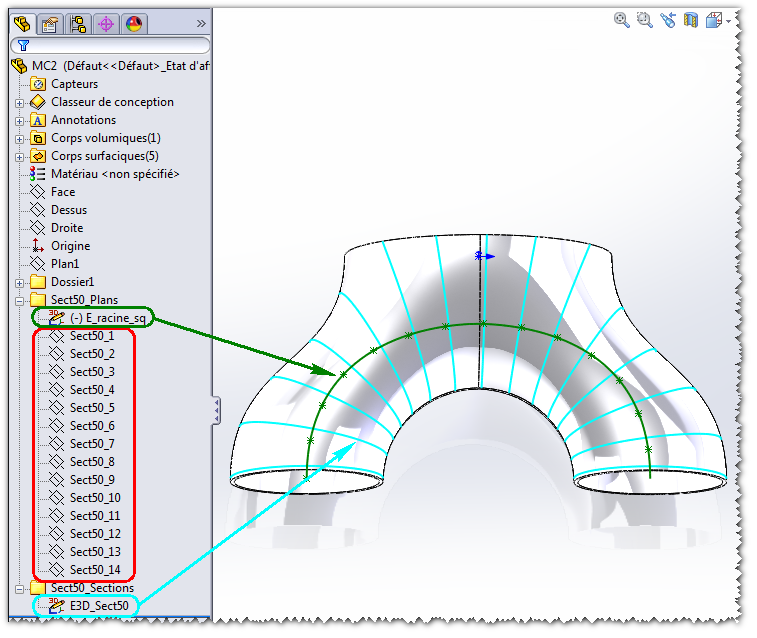
You can check the " Equidistant distribution of planes " option. In this case, you specify the number of planes to be distributed along the curve.
Here, we want to create 10 cross-sections distributed along the selected spline. The step size is calculated and displayed (grayed out).
By clicking on the  The side of the curve is inverted to create the planes.
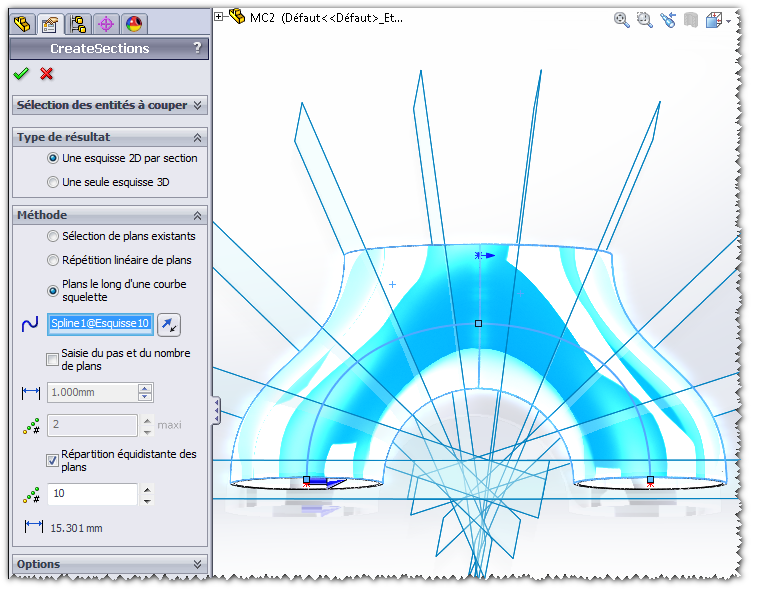
The result achieved in a single step is the creation of:
- A 3D curve that allows you to create plans.
- Of the 10 calculated plans.
- The 10 requested 2D sketches, including cross-sections.