Windows Task
This section allows you to trigger tasks for certain tools, such as CacheRefresh or DataRecovery, on the client computer using Windows events: Windows logon, Windows logoff, scheduled execution at a specific time, etc.
To access this feature, you must have Windows Administrator rights for the computer.
The Windows Task Scheduler can be launched from the Start menu by selecting Accessories, System Tools, and then Task Scheduler.

Example of scheduling a Windows task:

Next, several windows will appear in succession, allowing you to create this Windows task.
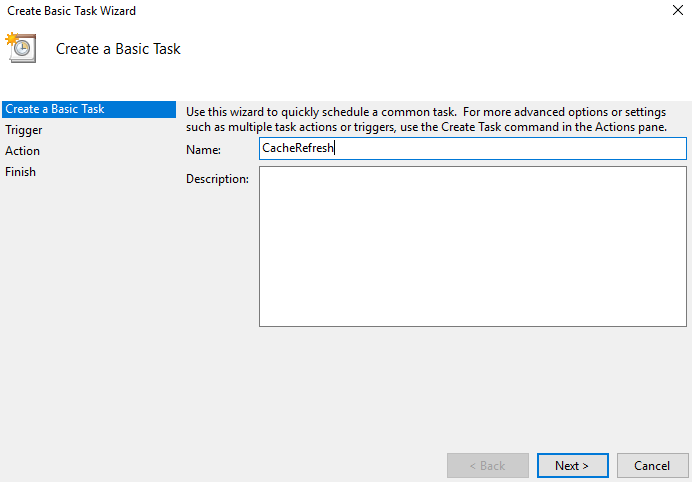
- Create a basic task... or Create a task...: Specify the name of the Windows task and, if desired, provide a description.
- "Trigger": Here, you specify what will trigger the task's execution. It can be:
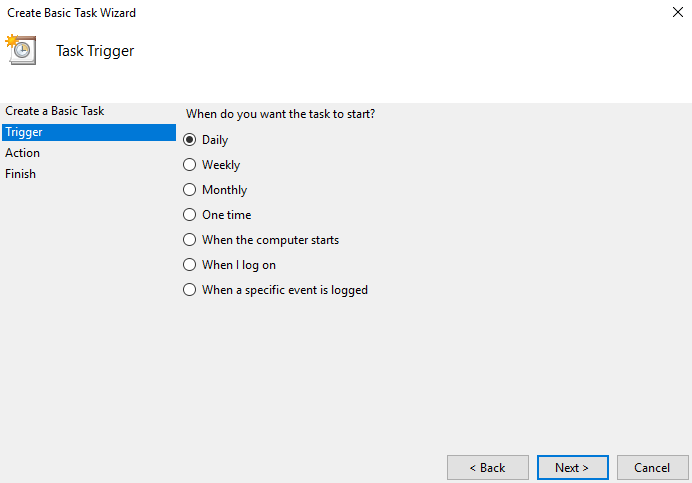
- Every day at a set time.
You can select your departure date using the calendar.


In this example, the task will run every day at 3:29 p.m. starting on January 7, 2014.
It is possible to check  in order to synchronize the hours with the time zone defined in the Windows options.
- Every week.

In this example, the task will run every week on Tuesdays and Fridays starting January 7.
It is possible to check in order to synchronize the hours with the time zone defined in the Windows options.
- Every month:
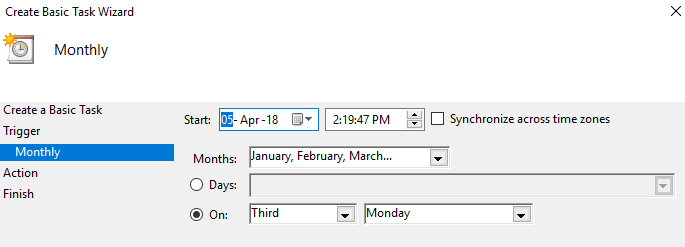
You can enter the months manually using the comma as a separator, or select them from the drop-down menu.
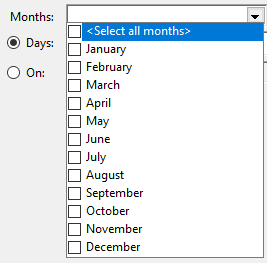 Tick the months to be taken into account.
Specify the day(s) to include either by entering them in the field provided, separated by a comma, or by selecting them from the list.
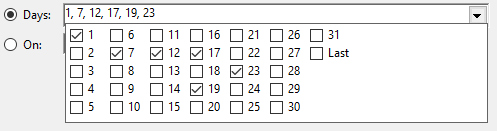
Regarding the trigger days, however, you can select "Active" to specify which days to include.
 Example Every third Tuesday of every month.
- Just once:

No comment! The task will run only once on April 1, 2014, at 4:00 p.m.
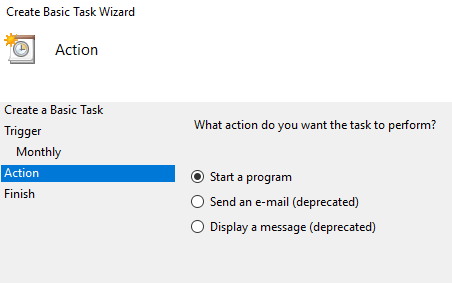
- Action: What action should be performed?
Start a program, send an email, or display a message.
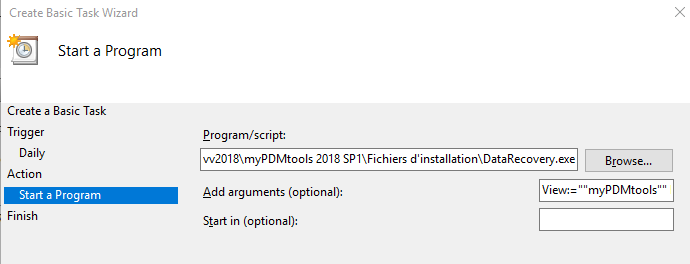
In our case, we're going to run a program.
CacheRefresh:
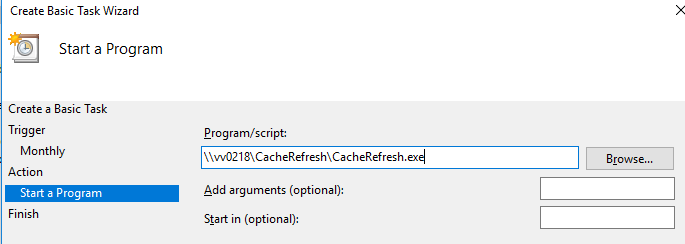
The location of the program to be launched will be the one specified in the Admin account settings for CacheRefresh in myPDMtools.
DataRecovery:
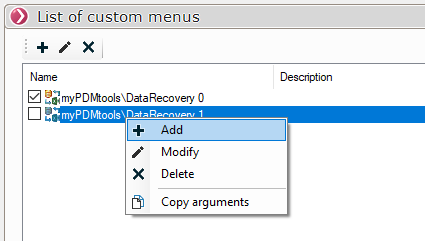
You can use the DataRecovery.exe file located in the installation folder to run the process using the Windows Task Scheduler and add the "copy" argument in the myPDMtools interface: